Posts

Showing posts from July 13, 2025

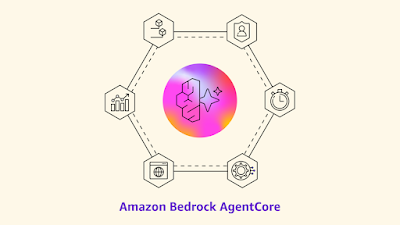
Amazon Bedrock AgentCore streamlines AI agent development
Image
Amazon Web Services (AWS) has announced new capabilities and tools to build AI agents. One key tool is  Amazon Bedrock AgentCore , which will allow customers to deploy and operate highly capable AI agents securely at scale. AgentCore is a set of services to deploy and operate AI agents using any framework and model. The challenge for AI adoption is building systems that can act autonomously across digital boundaries, while maintaining the security, reliability, and governance standards required for enterprise deployment.  AgentCore helps developers bridge the critical gap between proof of concept and production for AI agents. It delivers composable solutions that allows organisations to move agents from prototypes to applications that can scale to millions of end-users. Customers like Innovaccer, Boomi, Epsilon, and Box are already building with AgentCore , AWS said. Amazon Bedrock AgentCore services include: AgentCore Runtime : Agents need a runtime that's both s...

Becoming AI-first marketers

By Chris Koehler, CMO, Twilio AI has moved beyond the hype to become a vital part of how we work and live. In marketing, it’s rewriting the rules—from adaptive audience segmentation to predictive lead scoring and self- optimising campaigns that learn and improve with every click. AI empowers brands to move faster, act smarter, and build deeper customer relevance at scale. Take Trade Me , New Zealand’s largest online auction site. By using AI to anticipate user behaviours like bidding likelihood and purchase intent, they achieved a 20% lift in open rates and a 10% boost in click-throughs. When technology meets the right moment, the results speak for themselves. Automating routine tasks frees marketers to do what really matters: test, learn, and act on high-quality insights with speed and confidence. But AI’s impact goes beyond efficiency—it’s about making connections. When paired with rich data, AI enables marketers to move past shallow personalisation. It’s not just about adding a nam...

AI didn’t break enterprise integration, it just revealed the cracks

Image
By Denis King, CEO, Solace Source: Solace. King. The modern enterprise is a marvel of digital complexity. Thousands of applications, potentially billions of data points, and increasingly intelligent agents making decisions at the edge of operations. But beneath this surface lies an architectural flaw that’s about to become impossible to ignore – enterprise integration is broken. For decades, businesses have relied on traditional approaches including APIs, batch jobs, and point-to-point integrations to stitch their systems together. These methods were passable when integration was about moving data between a few back-office systems on a predictable schedule. But with the advent of AI, that era is over. Today’s businesses demand more than data syncing and API orchestration. It requires real-time collaboration between people, applications, and now, increasingly, autonomous software agents powered by AI. And those agents, unlike legacy systems, don’t wait for a nightly batch job or ...